A Reading Path down a Rabbit Hole: Jamini Roy
Selected conversations, interviews and profiles about West Bengal painter Jamini Roy
Profiles and interviews
- Know more about Jamini Roy and his paintings || Learn to draw : Day 1
- Know more about Jamini Roy and his paintings || Learn to draw : Day 2
- Jamini Roy: Revisit the Famous Patua Artist of Modern India
- Jamini Roy : Film - Portrait of a Painter
- Jamini Roy’s Art: Modernity, Politics and Reception
- Master Moshai: Jamini Roy’s Student Remembers His Teacher
- Unveiling the Mystique: Exploring Three Pujarins by Jamini Roy
- Jamini Roy: the master of line and colour
- Rebel Art in Colonial Times: The Visionary Legacy of Jamini Roy | Dr. Swaroop Sampat Rawal
Quotes & images
Kuch Hai readers want curation as catalyst rather than as a conclusion.
“He deliberately priced the works cheap so that more people could afford them. His paintings were bought by locals and Europeans. In the early 1960s, a “good work” of Jamini Roy could be bought for as less as Rs 150. Roy had explained in an interview: “I want every house to have a painting rather than hang a calendar picture.””
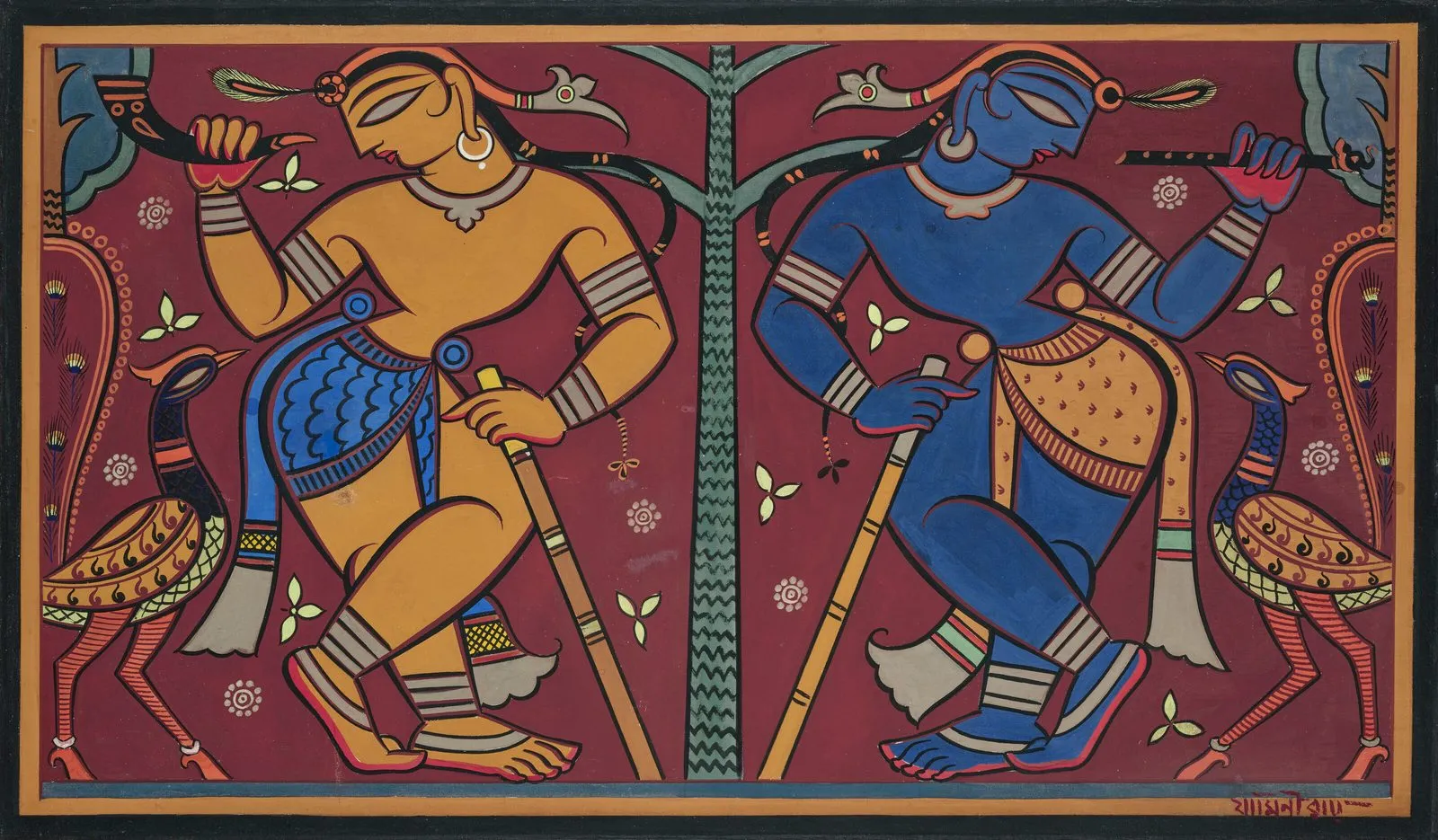
JAMINI ROY (1887-1972) Untitled (Krishna and Balaram) signed in Bengali (lower right) tempera on linen 34 x 58 in. (86.4 x 147.3 cm.)
“By combining the pictorial values of popular art with the conventionally pursued high art, level surface, central focus, and flattened out space, they succeeded in substituting a conventionally conceived high art.”
“Due to his ability to produce 20,000 paintings in his lifetime, he is described as an art machine since he can crank out about ten masterpieces per day while maintaining his artistic goals.”
“His respect for the middle class revealed his critical views; he believed that the ordinary person was more significant than the government since they were the voice of his art.”
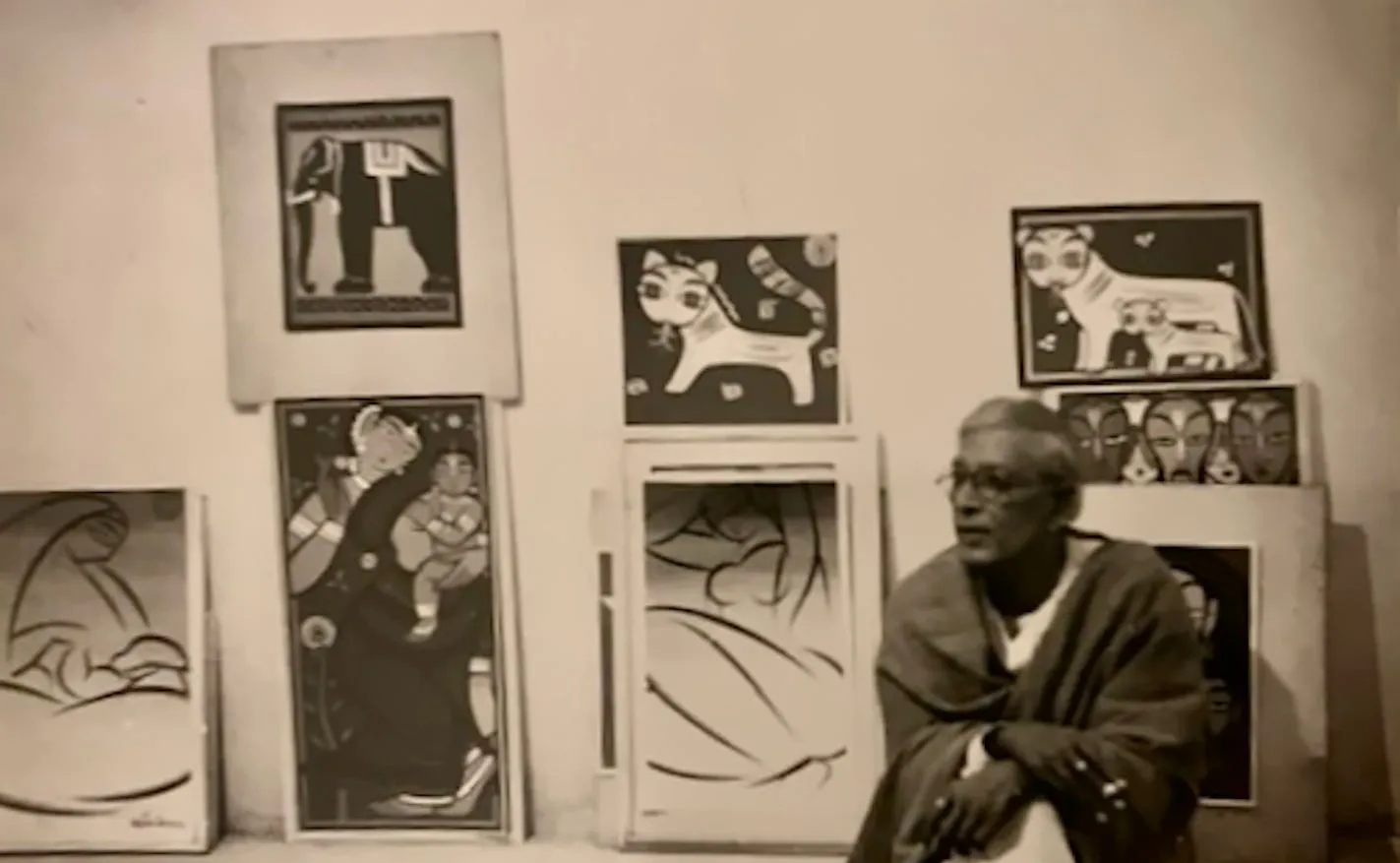
“To understand the world, you must first understand yourself and where you come from,” he would say. He believed that true art was born when one’s personal experiences intersected with the world’s vast expanse.
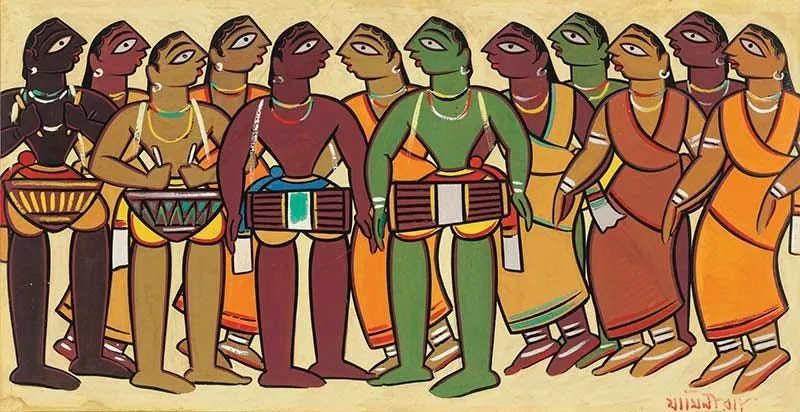
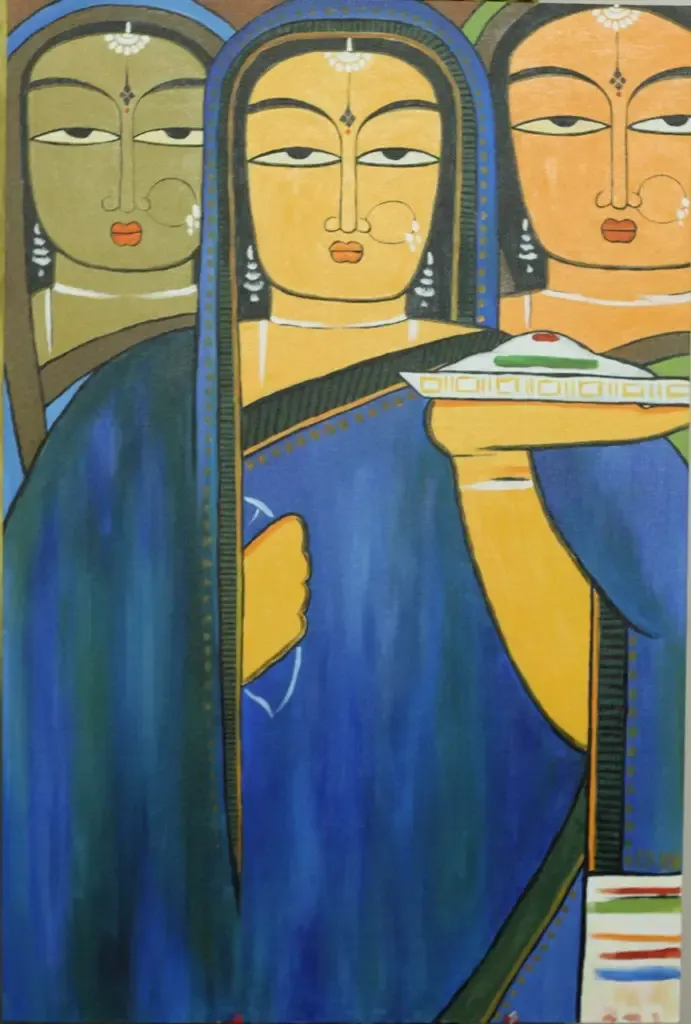
“By the time the show was held, one had already gotten familiar with Roy’s oeuvre— characterised by influences of the Kalighat pats, renditions of women from the Santhal community at work, figures with almond-eyes and the brilliant use of colour.”