A Reading Path Down a Rabbit Hole: Zarina Hashmi
Selected conversations, interviews and profiles with printmaker and sculptor Zarina Hashmi
Profiles and interviews
- Feminism for Me Was About Equal Pay for Equal Work—Not About Burning Bras: Interview with Zarina
- Remembering Zarina, 1937–2020
- Zarina Hashmi – ‘My Work is About Writing’ | TateShots
- Threads of Memory: A conversation on Zarina
- Playing with the Medium: Zarina’s Evolution as an Artist and Printmaker
- “Zarina: Floating on the Dark Sea” by Sandhini Poddar
- The Artist Project: Zarina Hashmi
- How Zarina Hashmi’s Minimalist Art Intersects Identity, Memory, And The Idea Of Home
Quotes & images
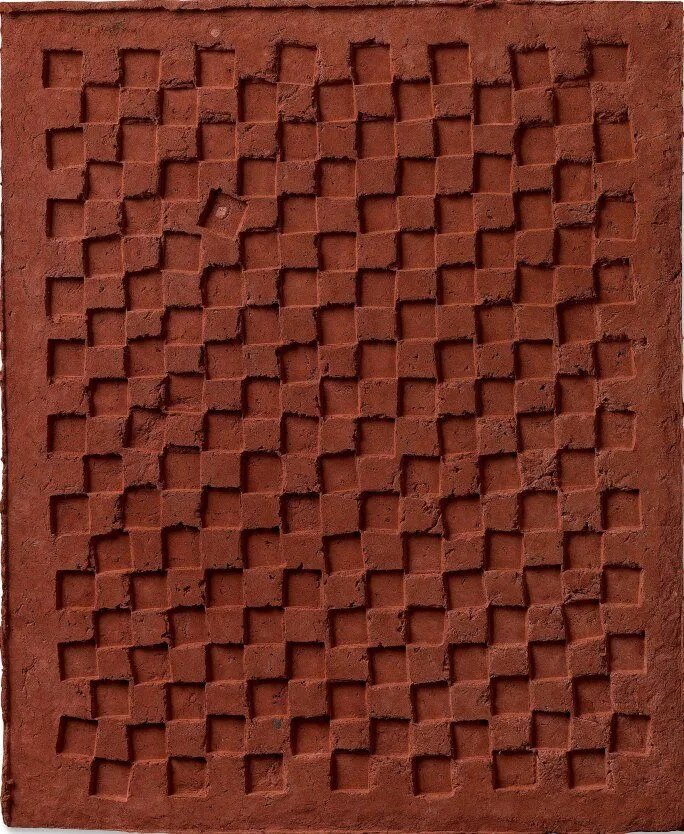
“When I first returned to Delhi from Paris, I brought a lot of paper with me—French paper, and BFK and all.5 Then, in Delhi, I started studying the tradition we have, because the Indian market was feeding the colonies and people had no jobs, and our papermaking had gone down because it was cheaper to buy imported paper. So I started using handmade paper, Indian made from the Gandhi ashram.”
“SS: What did you like about the Indian handmade paper compared to the paper from France? Z: It was very good quality; it was very even. I liked the rawness of it.”
“They’d say my work is very abstract and very minimal. I didn’t know what minimal was. I’d never heard the term, because I didn’t go to an art school.”
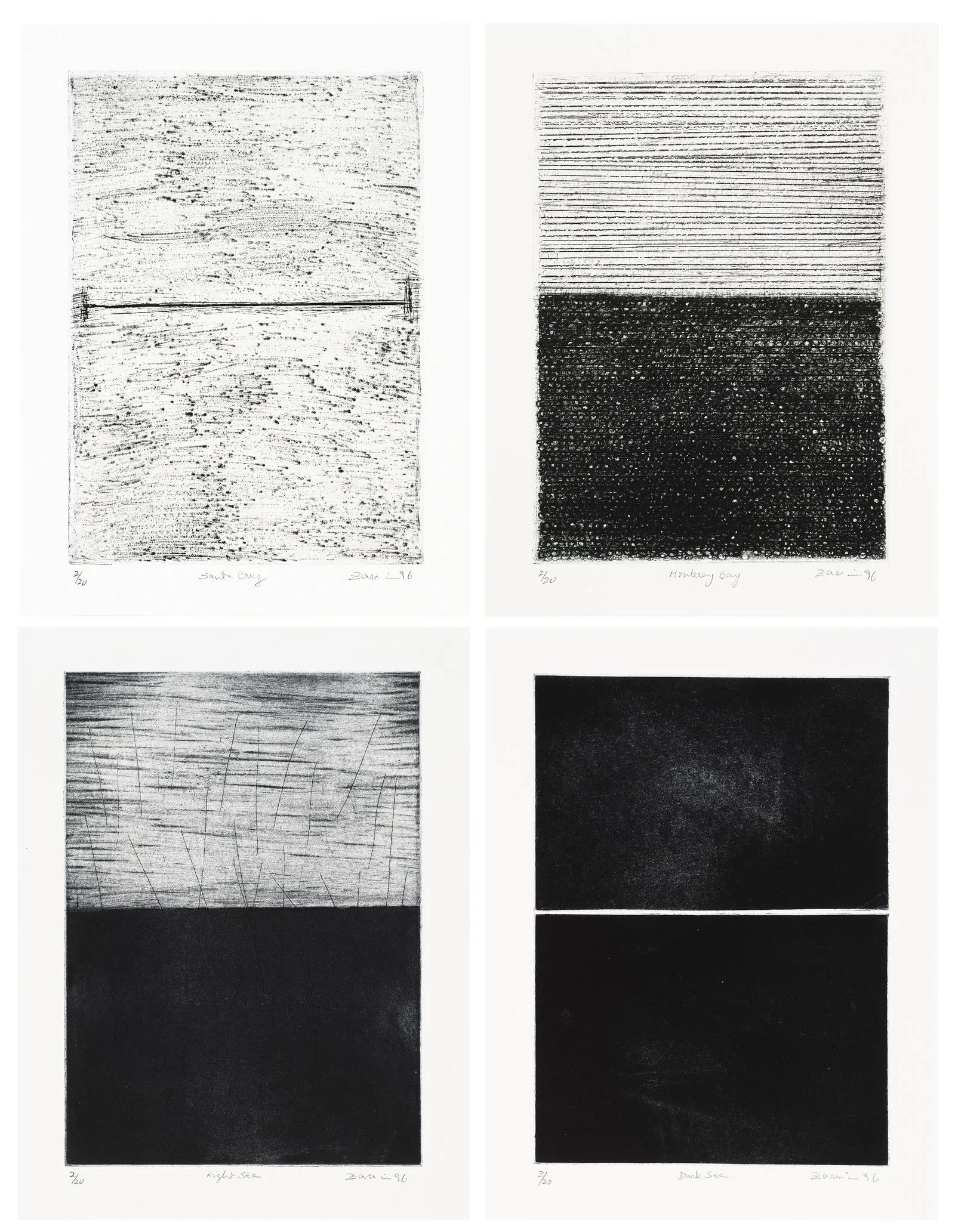
And Santa Cruz—four etchings and a line of Urdu poetry by Faiz Ahmed Faiz—uses the rigid formality of light and dark blocks to conjure up the mysterious space of creativity out of which poetry appears, while alluding to the works of artists like Brice Marden and Richard Serra.
“Zarina loved words. As she told me on that day: language always came to her first, images only followed. Her mother tongue was Urdu and many of her prints illustrated words that she felt were on the verge of disappearing.”
“Zarina was a cosmopolitan printmaker. Born and raised in the small university town of Aligarh, India, she studied woodcut printing in Bangkok, etching in Paris, silk-screening in Bonn, Japanese woodblock printing in Tokyo, and lithography in New York City…”
“Simultaneously, she was inspired by Gandhi’s call to support local industries. In what was to become a life-long habit of gaining deep knowledge of her materials, Hashmi educated herself on Indian handmade paper”
“The daughter of a bibliophile professor, she was raised in a house of books - not art.”
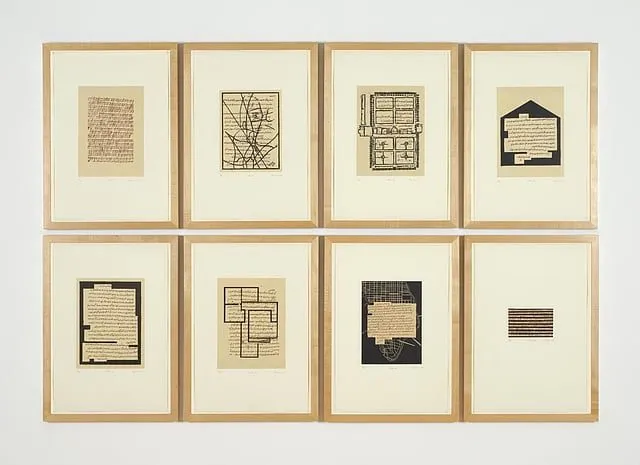
“One of Zarina’s seminal works, Letters from Home is a portfolio of eight monochromatic woodblock and metal cut prints, produced using original letters written in Urdu to Zarina Hashmi by her sister Rani…These heartfelt missives form the very essence of her artistic expression, serving as the catalyst for a profound exploration of textuality, native language, memory, childhood, diaspora, the concept of home her and her identity as a Muslim-born Indian woman artist.”
Kuch Hai readers want curation as catalyst rather than as a conclusion.